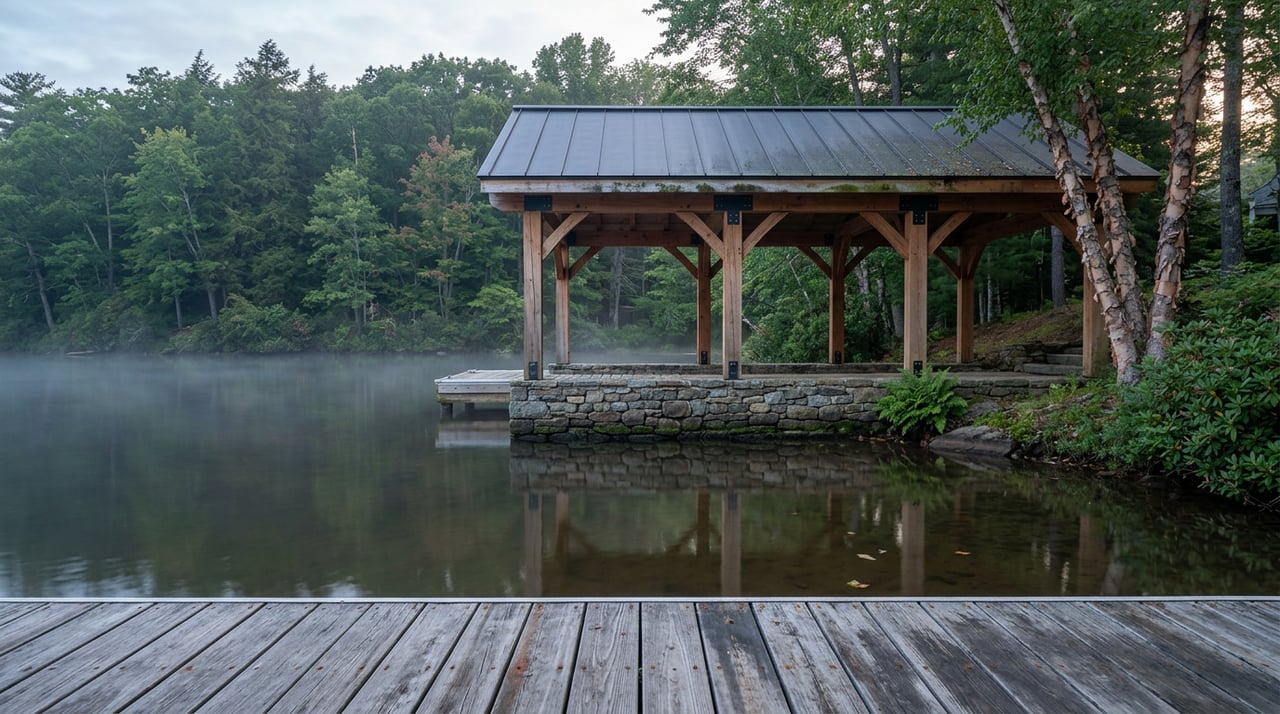
A buyer walks the shoreline the week before closing, admires the dock bobbing at the end of the yard, and assumes it comes with the house the same way the water heater does. It doesn't. On Lake Nottely, a dock is not a fixture that transfers with the deed, as TVA's guidance for buyers and sellers of waterfront property makes clear. It is a federal permit that belongs to a person, and that person is about to stop owning the property.
That single fact reshapes how a buyer should think about waterfront value on this lake, and it is the reason Highland Park's clubhouse marina deserves a second look rather than a shrug. The gated community on Lake Nottely, less than five minutes from downtown Blairsville, markets its boat slips as an amenity alongside the pool and the theater room. Framed against how dock ownership actually works on this reservoir, that amenity looks less like a consolation prize and more like a structural shortcut around a problem most private-dock buyers don't see coming until they're already at the closing table.
The Permit Is Not Part Of The Deed
Lake Nottely is a Tennessee Valley Authority reservoir, one of ten tributary lakes TVA manages for flood control, power generation, and recreation across the region. Full pool sits at 1,779 feet, and like every TVA tributary lake it runs on an annual cycle: filling through spring toward summer recreation levels, then drawn down more aggressively after Labor Day to make room for winter rain.
The water level isn't the part that catches buyers off guard. The permit is.
Under Section 26a of the TVA Act, any dock, pier, boathouse, or shoreline structure on a TVA reservoir requires a construction permit, and that permit is issued to a specific owner, not to the property itself. TVA's own guidance for buyers and sellers of waterfront property states it plainly:
"Permits do not automatically transfer with property ownership."
A new owner has 60 days from closing to file for a Section 26a permit in their own name. Skip that window, or discover the existing dock doesn't match what's on file, and the new owner inherits a compliance problem instead of a lake view.
Two Clocks, One Buyer
Here's where the friction compounds. The filing deadline is 60 days. The review itself is not. TVA's shoreline construction FAQ says the agency aims to issue permits for minor construction, the category that covers a typical residential dock, within 100 days. A buyer who closes in June and files immediately may not have a finalized permit in hand until well into September, after the lake has already started its seasonal pull-down toward winter pool. The paperwork clock and the boating season clock don't run at the same speed, and the buyer is the one holding both.
None of this means the dock disappears. TVA also requires that any changes to an existing structure, even minor ones, get separate approval, and it specifically flags one common surprise: a dock's second story can be an open deck with railing, but if a previous owner enclosed it or added a roof, TVA will likely require it to come off before the permit reissues clean.
Before writing an offer on any private-dock lot on Nottely, a buyer is well served to ask for:
- A copy of the current Section 26a permit, matched against what's actually built
- Confirmation of whether the dock's footprint, slip count, and any second story match the permitted plans
- A written timeline for when the seller last modified the structure, since unpermitted changes don't get grandfathered in
What Highland Park Does Differently
Highland Park doesn't sell individual dock rights lot by lot. The community's clubhouse sits lakefront with a saltwater infinity pool, a full kitchen, an outdoor fireplace, an exercise room, a theater room, and boat slips that residents use as a shared amenity rather than a private appendage to their own shoreline.
That distinction matters more than it sounds. TVA's fee schedule treats a single residential dock and a community marina as different categories of project. A minor shoreline alteration, the kind an individual homeowner files for a private dock, carries a $500 fee for new construction and $250 for a change-of-ownership reissue. A major shoreline alteration, the category that covers marinas and community docks, carries a $1,000 fee and a longer, more involved review.
The practical effect: somebody, at some point, paid the $1,000 and sat through the longer review to build Highland Park's marina once. Every buyer who comes after that isn't repeating a $250 change-of-ownership reissue and 60-day filing window for a private dock at each sale; the community isn't changing hands. The lots are. The marina, and the permit under it, stays put.
| Private dock lot elsewhere on Nottely | Highland Park clubhouse marina | |
|---|---|---|
| Who holds the permit | Each individual lot owner | The community, as a fixed asset |
| What happens at resale | New 60-day filing window, new owner's name on file | Nothing changes for the buyer |
| Fee exposure at each sale | $250 reissue (assuming compliant structure) | None to the individual buyer |
| Risk of enclosed second story, unpermitted additions | Buyer inherits the compliance question | Not applicable to a shared slip |
| Review timeline before full legal use | Up to 100 days after filing | Already resolved |
The HOA Number That Actually Matters
Listings for Highland Park lots have quoted the community's HOA dues at roughly $1,000 a year, sometimes phrased as just under $84 a month. That figure is worth reading against what it removes, not just what it adds. It isn't only buying pool access and a theater room. It's buying out of the recurring dock-permit cycle that private waterfront lots on this same lake are subject to every time they sell.
A buyer comparing a private-dock lot to a Highland Park lot should weigh the HOA line item against the avoided cost and avoided delay of an individual Section 26a filing, not against the HOA fee alone. The comparison only looks lopsided if you stop at the sticker price and never ask what each dollar is actually buying.
Five Minutes To Everyday Life
The community sits close enough to downtown Blairsville that the marina isn't the only reason to like the address. Groceries are a short drive at Foodland or Ingles Market. For breakfast that runs all day, locals point to Hole in the Wall, the oldest diner in Blairsville. For a meal without leaving the lake, The Big Cheese is the only restaurant actually situated on Nottely's shoreline. None of that changes a permit filing, but it's the texture that makes the practical math worth caring about in the first place. Nobody buys a lake lot purely to read federal regulations. They buy it to spend a Saturday on the water and be back in town for dinner without much of a drive.
What This Means If You're Comparing Lake Lots
The instinct when shopping Lake Nottely waterfront is to compare price per foot of shoreline and call it done. That number leaves out who is holding the permit risk and for how long. A private dock lot hands that risk to whoever owns the property at any given moment, resetting the clock at every sale. Highland Park's shared marina model settles that question once, at the community level, and lets individual buyers step into an amenity that's already resolved rather than a project that starts the day they close.
That's not an argument that a private dock is a bad idea. Plenty of buyers want their own structure and are glad to file the paperwork. It's an argument for knowing which kind of ownership you're actually buying before you fall for the view.
FAQ
Can a Highland Park lot owner still build a private dock instead of using the marina? Any private shoreline structure on Lake Nottely, inside or outside a planned community, would still fall under TVA's Section 26a process described above. Buyers considering that route should confirm current community rules and TVA eligibility for the specific lot before assuming it's an option.
Does the lake's seasonal drawdown affect marina access? TVA fills its tributary reservoirs, including Nottely, toward summer recreation levels starting in spring and begins a more aggressive drawdown after Labor Day heading into winter. Slip usability at any marina on the lake follows that same seasonal water-level pattern.
What happens if a seller's private dock was modified without a new permit? Per TVA's own guidance, unpermitted modifications aren't grandfathered in. TVA can require the structure be brought into compliance or removed, and that responsibility follows the new owner if it isn't resolved before closing.
Buying waterfront in the North Georgia mountains means weighing more than the view from the dock. If you're comparing lots on Lake Nottely, or trying to figure out what a community's amenities are actually solving for, Lucretia Collins and her team can walk the specifics with you before you write an offer. Let's Connect.
This article is general information, not legal, tax or financial advice. Consult a qualified professional about your situation.